
Composting 101
Composting is the natural process of turning food scraps and other organic matter (like leaves, wood chips, grass clippings, manure, etc.) into a rich soil amendment known as compost. Compost provides both macronutrients and micronutrients, enhancing soil and plant health and vitality.
Why Should I Compost?
-
Composting reduces the amount of material that is sent to landfills and incinerators. This reduces the amount of harmful greenhouse gas emissions produced by these traditional disposal methods.. When materials that could be composted are sent to landfills or incinerators they produce greenhouse gas emissions, particularly methane, which is a potent greenhouse gas produced when organic matter decomposes anaerobically (without oxygen) in landfills. Trash incinerators, often located in lower-income communities, produce airborne pollutants that contribute to many type of health issues.
-
Compost increases soil fertility and suppresses plant diseases, composting improves soil structure and increases both the levels of beneficial microbial activity and water retention capacity of soil
-
Composting creates 4X more jobs per ton than landfills or incinerators.
-
Upwards of 50% of material that people thrown away can be composted. And the stuff that you compost is the stuff that would normally makes your trash stinky and attract bugs and rodents.

Compost requires four main ingredients: Greens, Browns, Air and Water. When these four ingredients are blended in the right proportions, the magic of composting happens!
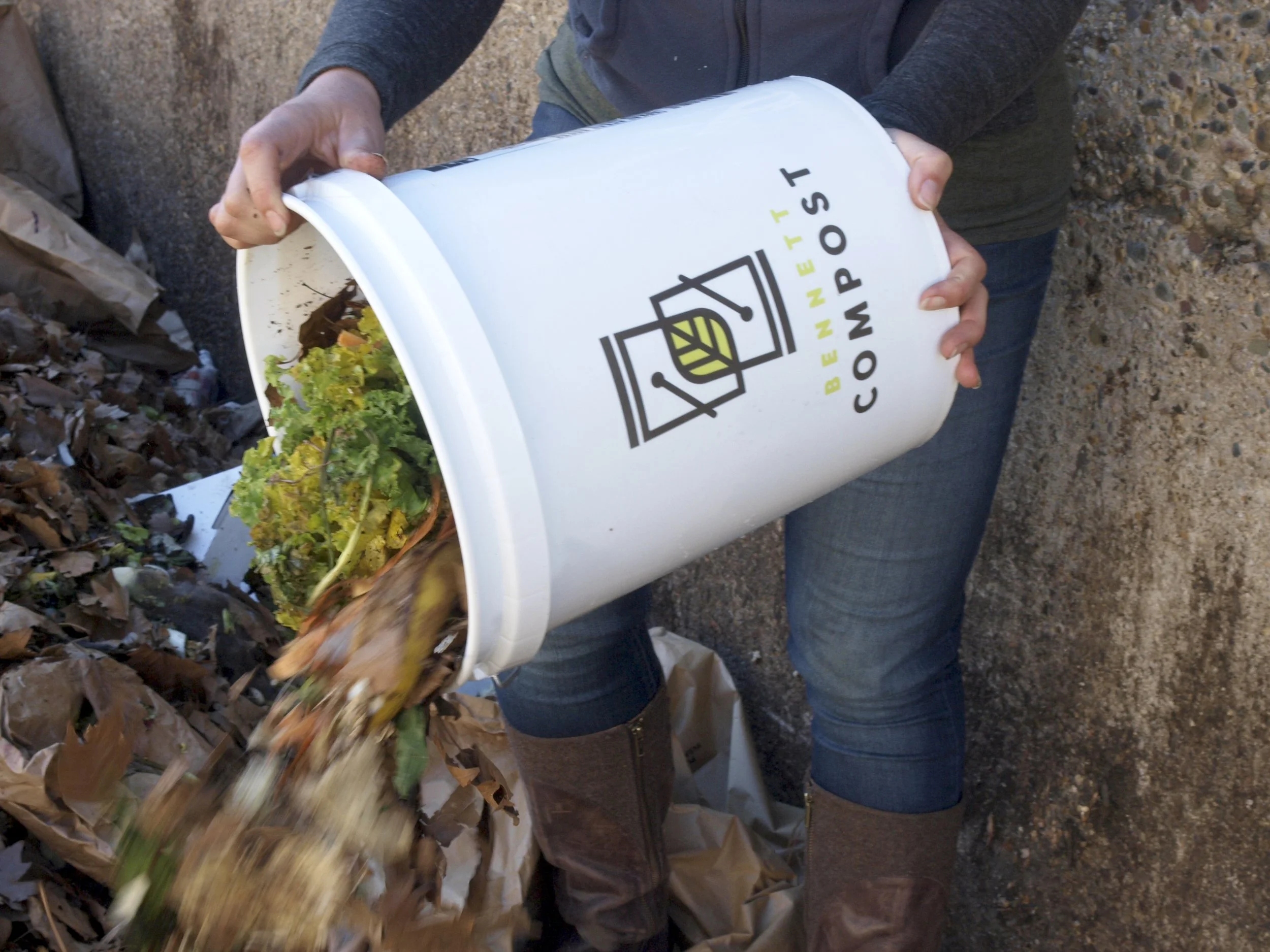
What are greens? Greens are food waste, coffee grounds, manure, fresh plants, and other fresh organic materials that are relatively high in nitrogen.
What are browns? Browns are leaves, wood chips, sawdust, shredded newspaper, and other organic materials that are relatively high in carbon.
Oxygen – microbes and other micro-decomposers require oxygen to “breathe” and transform the greens and browns into compost.
Water – microbes and other micro-decomposers require a thin layer of water around organic material to move around and metabolize organic materials.

How does Bennett Compost make compost?
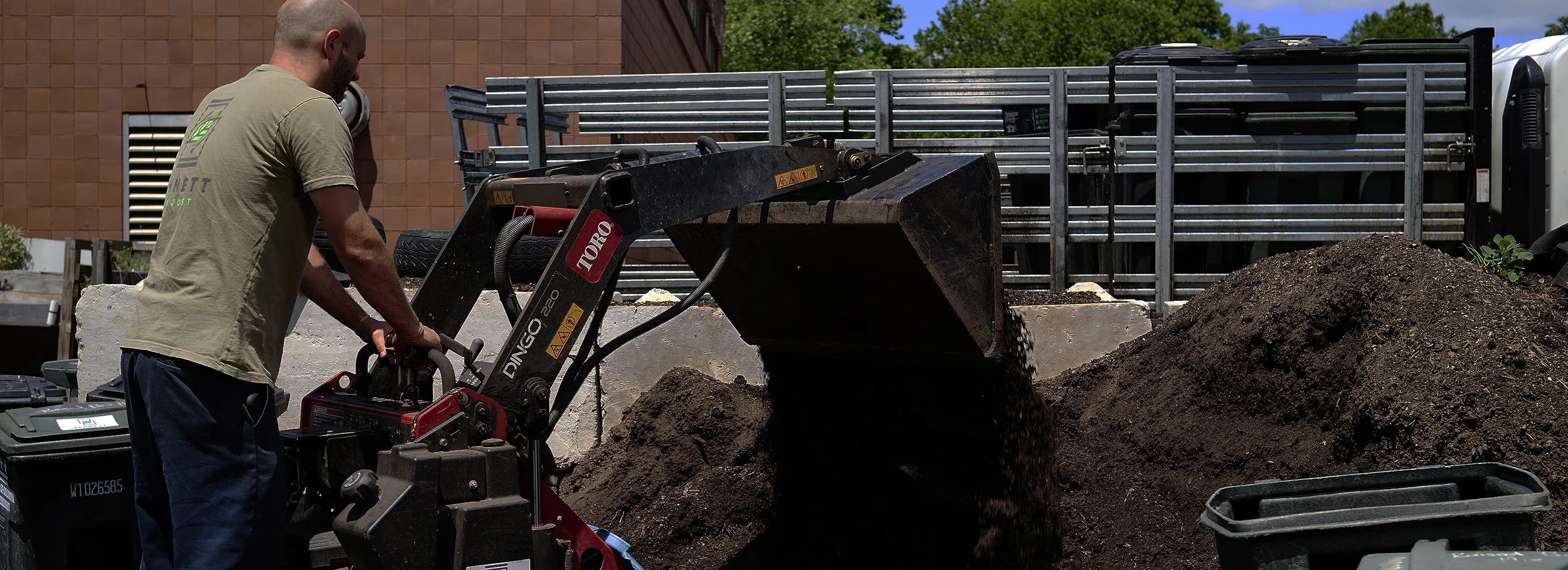
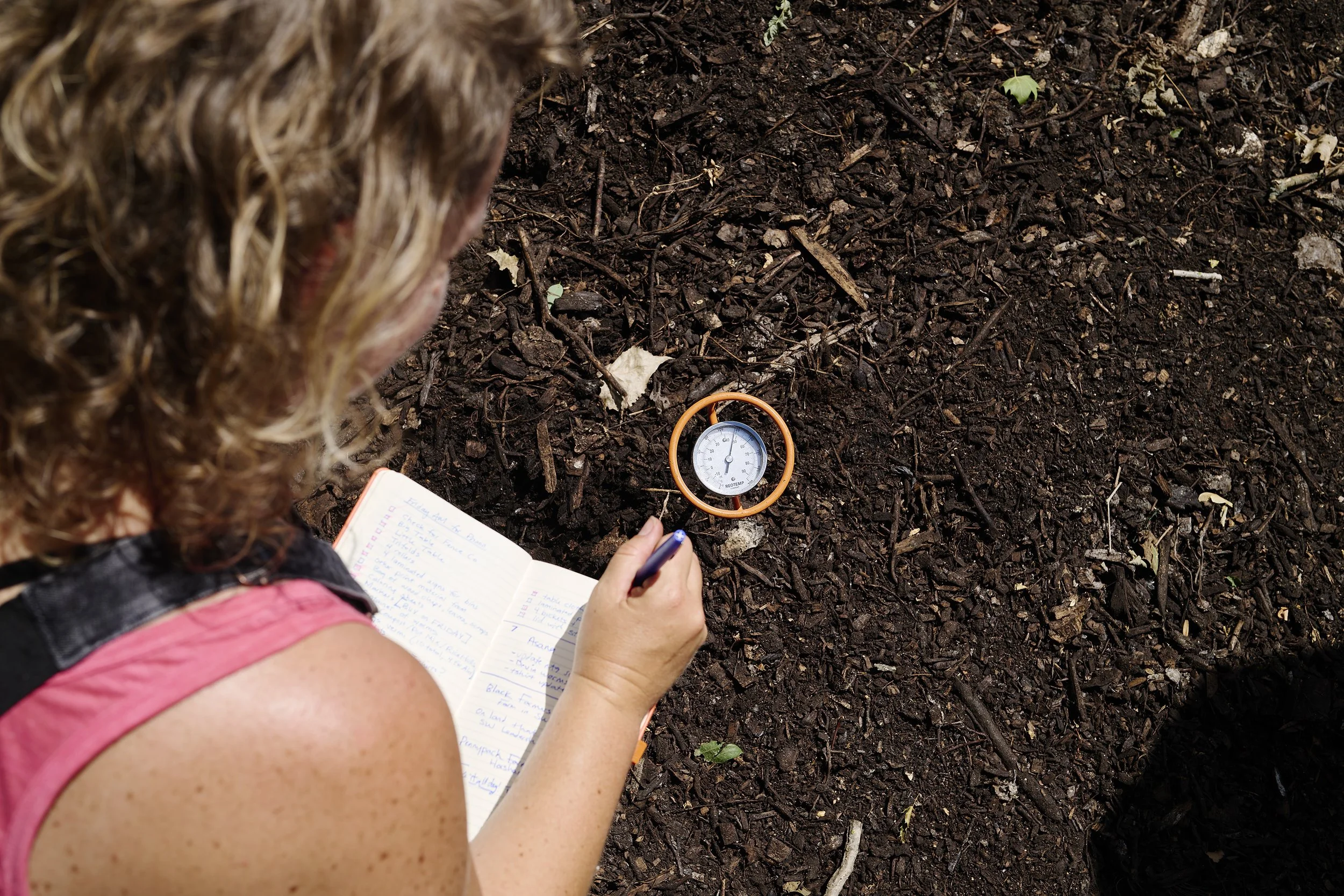
Bennett Compost uses a method of composting called Aerated Static Piles (ASP). Aerated Static piles involves blending “browns” and “greens” together and building large piles on-top of pipes that blow air into the middle of the piles. The material sits in these piles for 10 weeks where the oxygen from the pipes causes natural microbial activity to flourish and heating the piles to 145-165 degrees. After 10 weeks the material is screened. The smaller finished pieces are allowed to cure, or sit, for two months before they are finished and ready to be used. The larger pieces are returned to the beginning of the process to continue decomposing.
How can I start composting?
There are five ways to start composting: compost tumblers, compost bins, vermicomposting, community drop-off programs or curbside collection programs. Each of these methods have different advantages and disadvantages. Determining which method is best for you depends on a number of factors including the amount of space to host a bin, the amount of time you have to manage your compost, the types of materials you want to compost and what is available in your area.